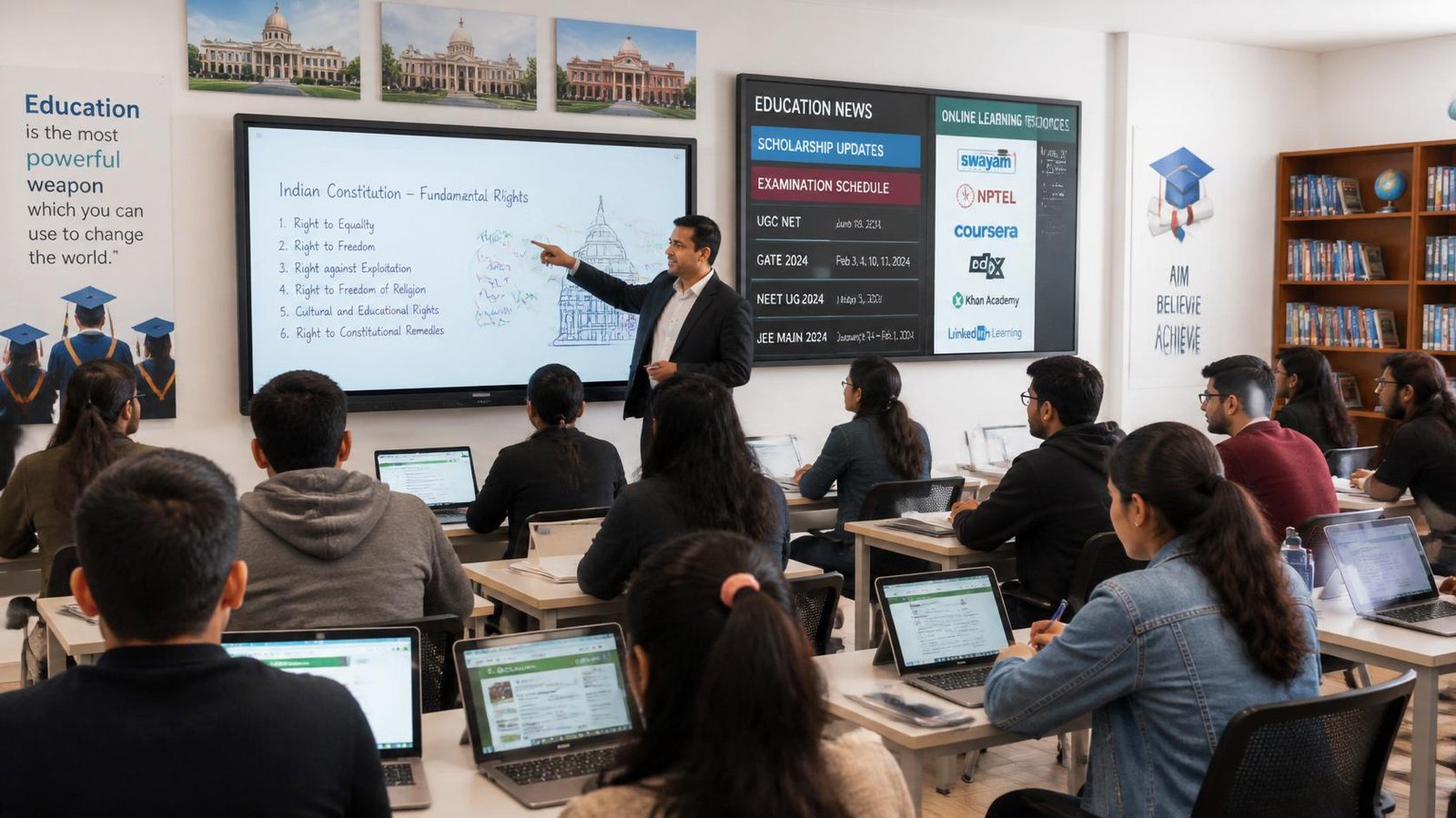
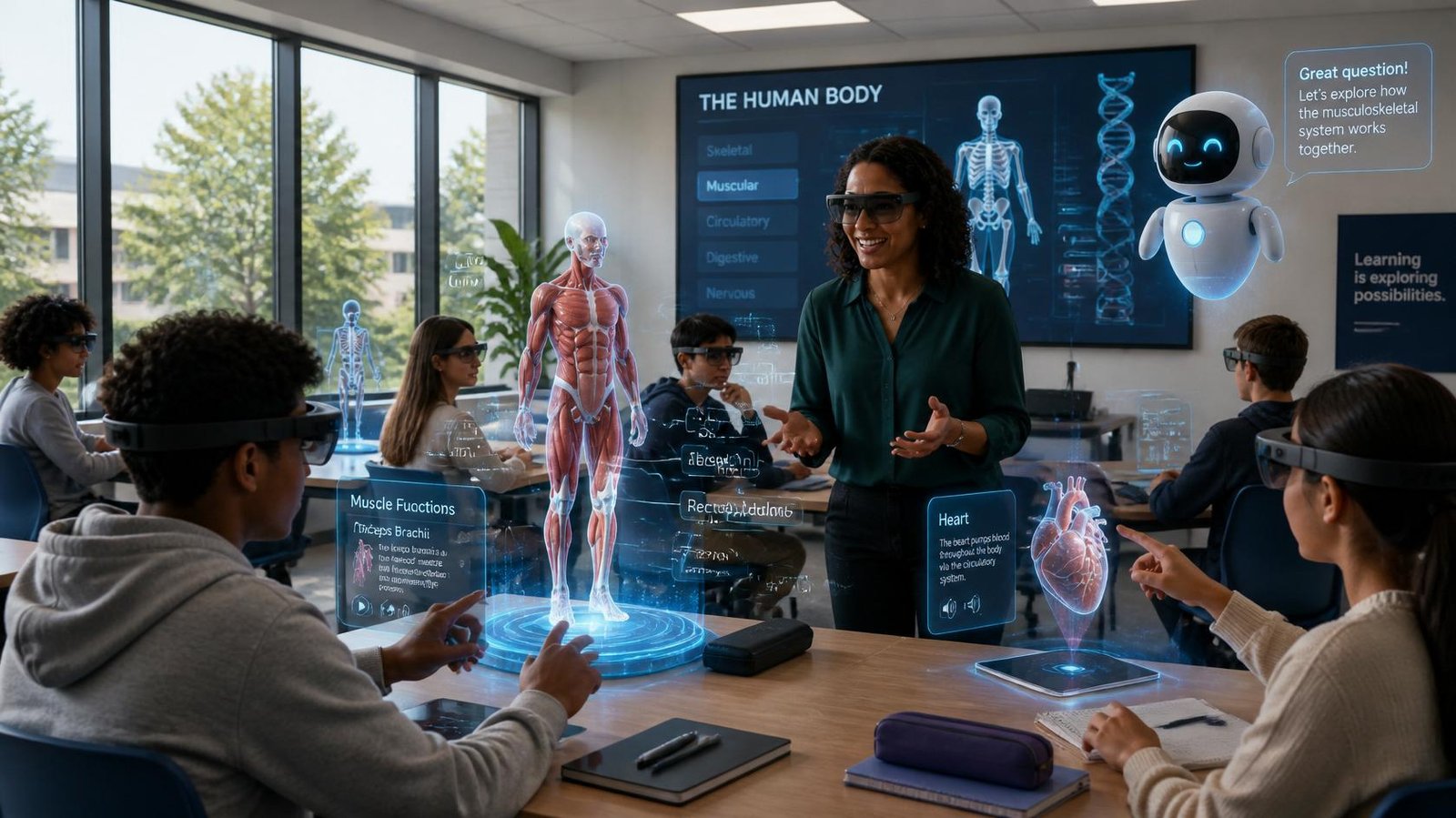
The global education ecosystem is currently experiencing one of the most rapid and profound transformations in human history. In 2026, the integration of Artificial Intelligence (AI), worsening climate realities, and a renewed focus on student mental well-being have taken center stage on the international educational agenda. From high-level summits at UNESCO to the daily realities of modern classrooms, this comprehensive report explores the major news, emerging trends, and critical challenges shaping the future of learning worldwide.
1. Major Global Education News of 2026
A. UNESCO’s “Transforming Education Summit +4”
In July 2026, global leaders, policymakers, and youth advocates gathered at the UNESCO Headquarters in Paris for the Transforming Education Summit +4 (TES+4). This high-level convention served as a critical check-in on the commitments made during the 2022 UN World Summit, specifically targeting Sustainable Development Goal 4 (SDG 4)—ensuring inclusive and equitable quality education for all. The consensus was clear: global educational frameworks must be redesigned to be resilient against geopolitical conflicts and climate-induced disruptions.
B. Launch of the Post-2030 Global Education Agenda
With the 2030 deadline for the UN Sustainable Development Goals fast approaching, international educational bodies have officially launched a three-year global consultation process (spanning 2026–2028). The objective is to design the Post-2030 Global Education Agenda. Unlike previous frameworks, this initiative heavily prioritizes grassroots feedback, actively involving student unions and young innovators to dictate future academic priorities.
C. The International Funding Crisis
A concerning development this year is the sharp decline in international aid allocated to education. Several developed nations have trimmed their foreign aid budgets due to domestic economic pressures. Organizations like Oxfam and the Global Student Forum have issued urgent warnings, noting that budget cuts are severely crippling primary and secondary education funding in developing and low-income countries.
D. 40% Increase in Attacks on Educational Institutions
According to the 2026 report by the Global Coalition to Protect Education from Attack (GCPEA), incidents of violence against schools, students, and teachers in conflict zones—such as parts of the Middle East, the Democratic Republic of Congo, and Colombia—have surged by 40% over the last two years. This crisis has systematically deprived millions of children of their fundamental right to a safe learning environment.
2. Top 10 Global Educational Trends Shaping 2026
The traditional rote-learning model is rapidly fading. In its place, a dynamic paradigm focused on future-proof skills and technological fluency has emerged. The following ten trends define the educational landscape today:
- Mandatory Artificial Intelligence (AI) Integration: AI is no longer an optional novelty in schools. Educators globally are utilizing AI for lesson planning, automated grading, and real-time student performance analytics.
- Hyper-Personalized Learning: Recognizing that no two students learn at the same pace, AI-driven adaptive learning platforms diagnose individual learning gaps and automatically customize curriculum tracks for every student.
- The Lifelong Learning Imperative: The rapid evolution of the global job market means that education no longer ends with a university degree. Continuous upskilling and reskilling have become a lifelong necessity for professionals of all ages.
- Micro-credentials and Alternative Badging: Traditional four-year degrees are facing stiff competition from short-term, targeted online certifications. Tech giants and universities alike are partnering to offer micro-credentials that carry immediate weight in the hiring market.
- Emphasis on “Power Skills” (Human Skills): As automation handles routine tasks, educational systems are shifting focus toward uniquely human capabilities. Critical thinking, emotional intelligence, leadership, and cross-cultural collaboration are now explicitly graded.
- Mental Health and Holistic Wellbeing: Student burnout and anxiety have reached unprecedented levels. In response, schools and universities worldwide are integrating mental health counseling and mindfulness directly into the core curriculum.
- Green Education and Climate Literacy: Climate change is no longer just a chapter in a geography book. “Green Education” has become a mandatory, cross-disciplinary subject aimed at preparing youth to innovate for environmental sustainability.
- Symmetric Hybrid Learning Environments: The boundaries between physical classrooms and digital spaces have dissolved. Modern schools utilize advanced Learning Management Systems (LMS) where students seamlessly alternate between in-person attendance and remote collaboration.
- Immersive Virtual & Augmented Reality (VR/AR): Complex subjects in medicine, history, and engineering are being revolutionized by VR headsets. Students can now virtually dissect anatomical models or explore ancient Roman architecture in a fully immersive 3D space.
- Surge in International Student Mobility: The desire for cross-border education has bounced back stronger than ever. Projections indicate that the global international student population will soon cross 10 million, driving massive demand for standardized global curricula like the Cambridge IGCSE and International Baccalaureate (IB).
3. Global Education Matrix (Data Table)
The table below provides a structured overview of the critical sectors in global education, comparing their current status, immediate challenges, future targets, and the tools driving them.
| Educational Sector / Trend | Current Status (2026) | Primary Challenges | Future Target (2030+) | Key Technologies & Frameworks |
| Artificial Intelligence (AI) | Over 60% of educators utilize AI daily for administrative or instructional support. | Academic dishonesty, data privacy concerns, and ethical biases in AI models. | A personalized AI academic agent/tutor for every student globally. | Squirrel AI, Microsoft Reading Coach, ChatGPT-5 |
| Infrastructure & Access | Smartboards, high-speed Wi-Fi, and cloud infrastructure are standard in urban centers. | The widening “Digital Divide” in rural and low-income developing regions. | 100% cloud-based, paperless, and digitally inclusive schooling infrastructure. | Google Classroom, Canvas LMS, Cloud-Computing Hubs |
| Curriculum & Assessment | Shifting from memorization to “Learning by Doing” and competency-based models. | Resistance to change from traditionalists; lack of modern teacher-training programs. | Fully automated, skill-based, real-time assessments instead of high-stakes exams. | STEAM Education, Gamified Quizzes (ClassDojo, Kahoot!) |
| Teacher Welfare & Workforce | Severe global teacher shortages; high rates of professional burnout. | Stagnant wages, increasing administrative burdens, and classroom behavioral issues. | AI-assisted workflows to cut administrative tasks by 50%, letting teachers focus on mentorship. | ResNet (Research Network) Guidelines, Automated Grading Tools |
| International Mobility | Historic highs in international school enrollments and study-abroad applications. | Rigid visa policies, geopolitical tensions, and skyrocketing tuition fees. | Seamless global credit transfers and affordable hybrid/dual-degree options. | Global Exchange Portals, Blockchain-verified Diplomas |
| Sustainability & Environment | Green curricula are being codified into national educational frameworks. | Extreme weather events (heatwaves, floods) causing frequent, unplanned school closures. | Transforming schools into zero-carbon learning hubs powered by renewable energy. | Climate Change Curriculum Workshops, Eco-Schools Framework |
4. Critical Evaluation: The Widening Educational Chasm
An objective evaluation of global education reveals a dual reality. While technology is making education incredibly efficient for some, it is simultaneously widening the gap between the privileged and the marginalized.
The Paradox of the Digital Divide
Advanced technologies like generative AI and VR require high-speed internet, reliable electricity, and expensive hardware. In developing nations and rural communities, these basic necessities are still lacking. Consequently, while a student in New York or Tokyo leverages AI to master quantum physics, a student in a remote village may struggle to access updated textbooks. If left unaddressed, this Digital Divide will solidify structural global inequalities for generations to come.
The Battle for Student Attention
Recent data from international educational insights reports highlights a growing crisis in classroom engagement. Approximately 80% of secondary school teachers report that competing with smartphones and short-form social media (like TikTok and Instagram Reels) for student attention is their greatest daily obstacle. The drastic drop in student attention spans has ignited fierce policy debates globally, prompting several countries to enforce absolute bans on mobile devices within school premises.